Setting up children with healthy oral hygiene habits and ensuring they go to regular dental check-ups throughout their childhood is key to maintaining good oral health in the future.
While that’s often easier said than done, our dentists know the challenges many parents face when it comes to getting their young ones to brush and floss and even come to appointments. That’s why we’re here to help you help your kids, with kindness, patience, and friendly faces that can help explain what’s going on in a way they can understand.
Ultimately, it’s all about ensuring kids’ dental health and setting them up for life.
What is kids’ dental?
Paediatric dentistry, or children’s dentistry, is the services and treatments given to those under the age of 18 for their oral health needs.
By the time your child reaches 2 years of age, you must make an appointment for their first visit with a dentist. There may be some rare circumstances that would warrant a visit to a dental provider before this age, but for most children, this is the age when their official dental care begins.
On their first visit to the practice, this will be an opportunity for your child to become acquainted with the dental chair, environment, staff, and dentist. Our friendly dentist will perform a visual examination of your child’s teeth, as well as address any concerns or identify any possible future issues. You and your child will also have the opportunity to ask any questions, and the dental staff will instruct you both on proper dental hygiene at home.
From there, your child will receive standard dental care as they grow. This includes all of the usual treatments and services you would expect as an adult, including:
Preventive care
Routine dental cleaning
Oral examinations
Dental x-rays
Fillings
Orthodontics (plates or braces)
Extractions
Do your kids play contact sports?
Game faces need protection. Nearly 40% of dental injuries are sports-related, yet many players skip a mouthguard. Book your custom mouthguard early so it’s ready before the season starts.
As children grow, their baby teeth will slowly fall out and be replaced by adult teeth. This means there is a lot more change and development than in adult teeth, which is why children need regular check-ups to ensure everything is developing as it should and to treat or avoid problems before they arise.
Common issues with children’s oral health are:
Tooth decay
Cavities
Damage to teeth as a result of accidents
Thumb sucking/pacifier sucking
Bad breath
Gum disease
Tooth grinding
Young children under the age of five will likely only need visual check-ups and basic cleanings. After the age of five, your dentist will likely suggest moving to x-ray check-ups to keep a better eye on teeth developing under the gum line.
During this time, your dentist will also work with you to encourage good dental hygiene habits at home, including tips and tricks to get your little ones to brush and floss.
Advantages of children’s dentistry
Looking after our children’s health is vital, and their oral health is a big part of that. Here are a few key advantages of paediatric dentistry:
Maintain good oral health during childhood: Dental pain can be rough, especially for young kids, which is why avoiding issues with regular check-ups and good dental hygiene habits is a good way to ensure great oral health during childhood.
Set up good habits for life: Taking your child to regular dental visits and teaching them the importance of dental hygiene will help to set them up with good habits and dental health for life.
Avoid dental problems as an adult: Poor dental health as a child can lead to issues with teeth and gums throughout life, leading to discomfort and expensive treatments during adulthood. Preventative children’s dentistry and a solid, healthy foundation can help to avoid these problems down the track.
Avoid dental fear: By starting dental visits early, you may be able to avoid the fear that some children (and plenty of adults) have of dentists and dentistry.
How much does kids’ dental cost?
The cost of a standard children’s check-up will vary in price just as adult treatments do. If you go to a specialist paediatric dentist rather than a standard dentist who offers children’s dentistry, you may be charged extra.
For children who are eligible for Medicare, and receive at least one additional benefit, they may be eligible for CDBS. CDBS benefits and payments can be used to pay for specified treatments at a private dentist. CDBS provides $1,158 in benefits to be used over two consecutive calendar years, for basic dental services inclusive of dental examinations, x-rays, cleaning, fissure sealing, fillings, and extractions.
If you are eligible for CDBS, you will be able to use your benefits and make an appointment immediately with our team.
What to expect from your child’s dental appointment
Paediatric dental care is usually quite similar to adult check-ups but with a little more care and patience. Here’s what you can generally expect:
The dentist will introduce themselves and chat a little to make your child comfortable
You will be invited to stay in the room with your child
For younger kids, the appointment will include asking you several questions about their health and habits at home
The dentist will perform an oral examination
For children over the age of five, the dentist may take an x-ray
The visit won’t take much more than 30 minutes
The dentist will be extra gentle with kids and will explain what’s happening at each point
If your child gets scared or upset, you can pause the appointment to comfort them and help them calm down
Maintaining your child’s dental health at home
It is critical to establish healthy dental habits for your children, including brushing sessions at least twice a day for two minutes each session, as well as flossing when age-appropriate after two years old.
For young babies, use a cloth to clean their gums and when their teeth begin to appear, use a specially designed toothbrush for infants to keep their teeth healthy and clean.
Do not use any toothpaste until 18 months of age, at which time you may use a pea-size amount of children’s toothpaste with low fluoride until two years of age. From ages two to eight, children may use a smear of regular children’s toothpaste for brushing their teeth. Additionally, aim for a diet that’s low in sugar, as sugar can cause tooth decay at any age.
Keep in mind that children younger than the age of six will need your assistance to brush their teeth properly. And don’t forget to replace toothbrushes every three to four months.
Our goal is to help children develop healthy smiles that will last a lifetime; get in touch with our friendly team and schedule an appointment.
Children usually stop sucking between the ages of two and four years of age, or by the time the permanent front teeth are ready to erupt. If you notice changes in your child’s primary teeth, or are concerned about your child’s thumbsucking consult your dentist.
Tips for helping your child stop thumb sucking:
Praise your child for not sucking.
As children often suck their thumbs when they feel insecure or need comfort, correct the cause of the anxiety and provide your child with comfort.
Involve an older child in choosing the method for stopping the thumb they do not stop sucking.
Our dentist can encourage children and explain what could happen to their teeth if they do not stop sucking.
If these tips don’t work, remind your child of the habit by bandaging the thumb or putting a sock on the hand at night. Our dentist or your pediatrician might prescribe a bitter medication to coat the thumb or the use of a mouth appliance.
Did you know 1 in 10 children have had at least one decayed tooth removed before the age of nine?
How much do you know about your child’s dental health? Take our quick quiz to find out and pick up a tip or two along the way.
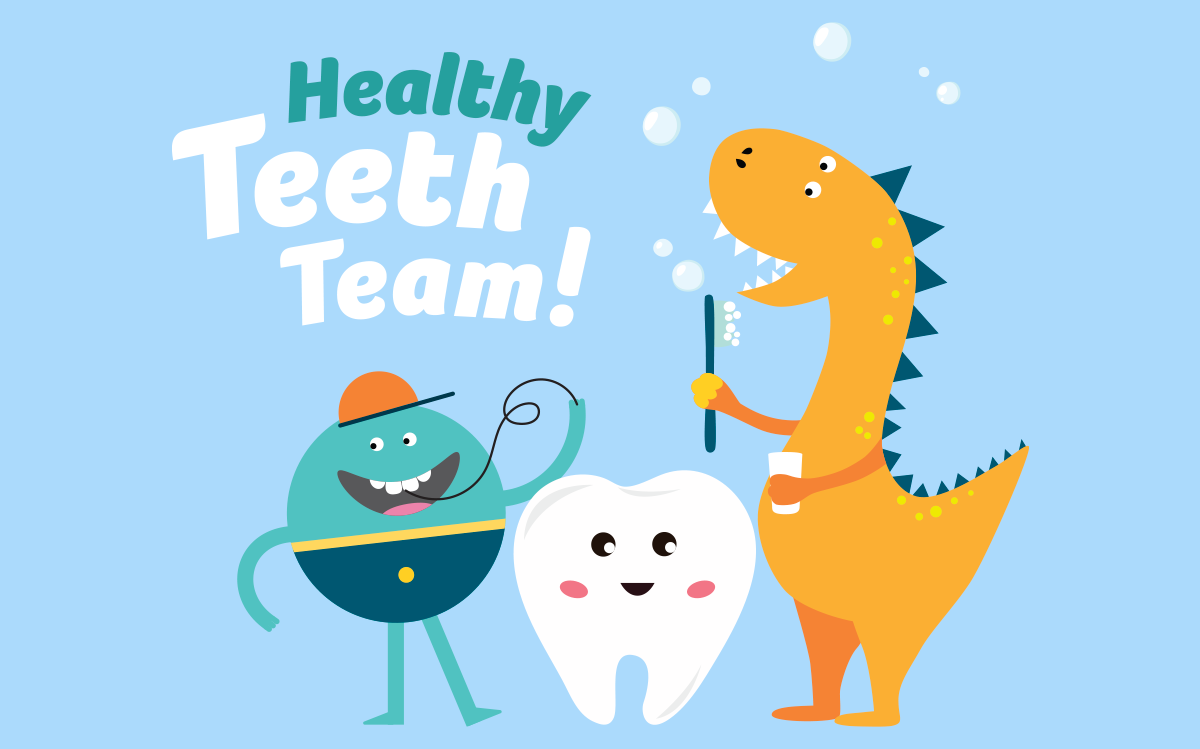
Meet the Health Teeth Team
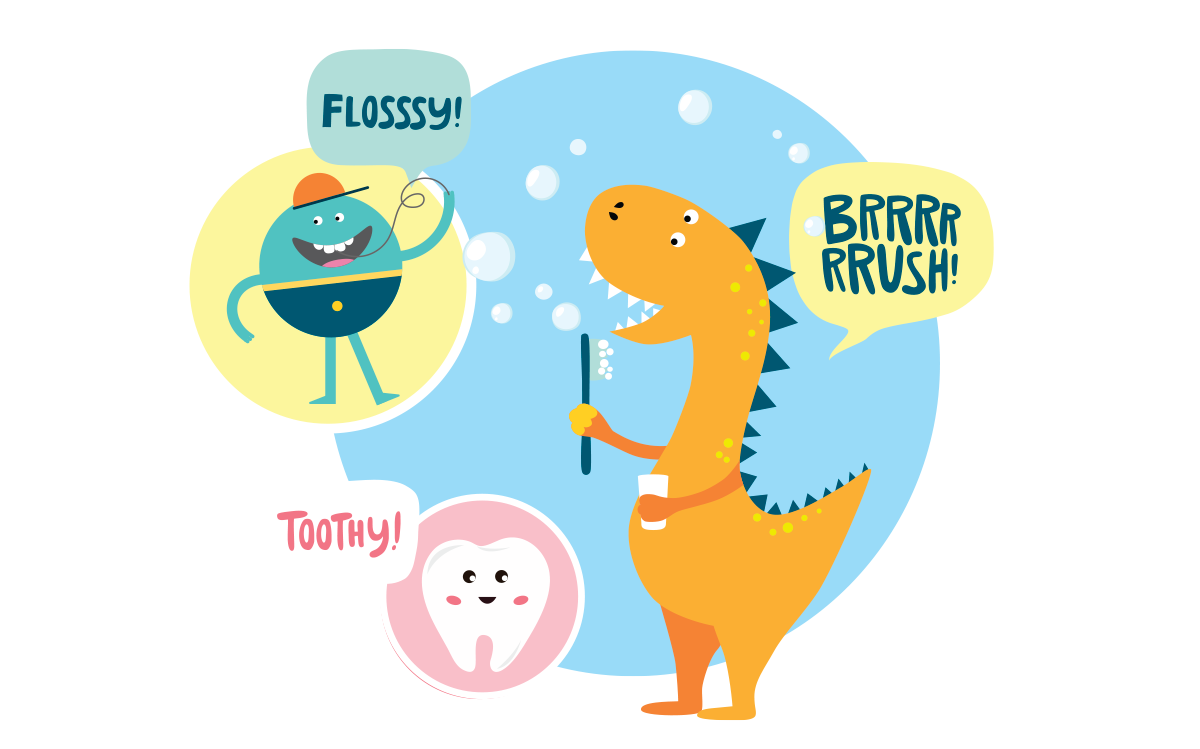
Introducing Brush, Toothy and Flossy!
They’ll help make caring for your child’s teeth fun, with activities and guidance to establish a healthy oral care routine.
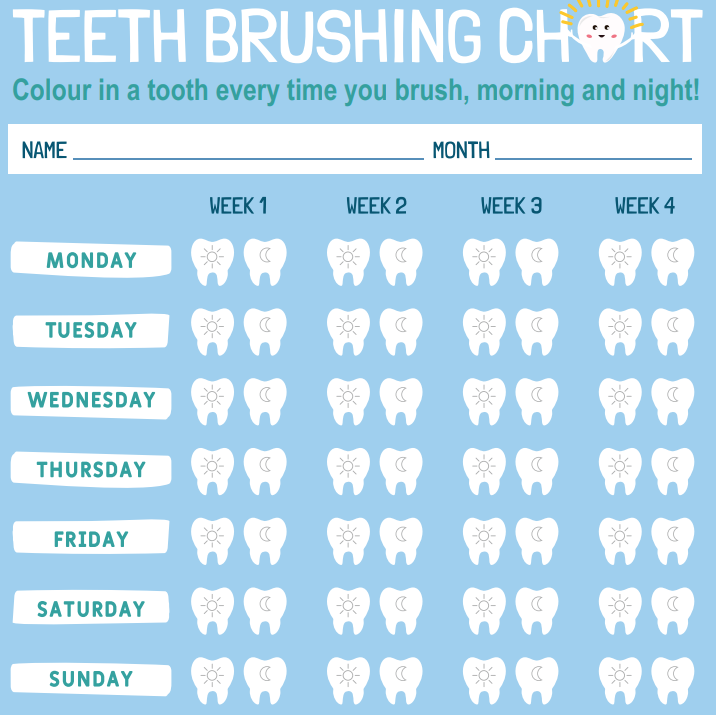
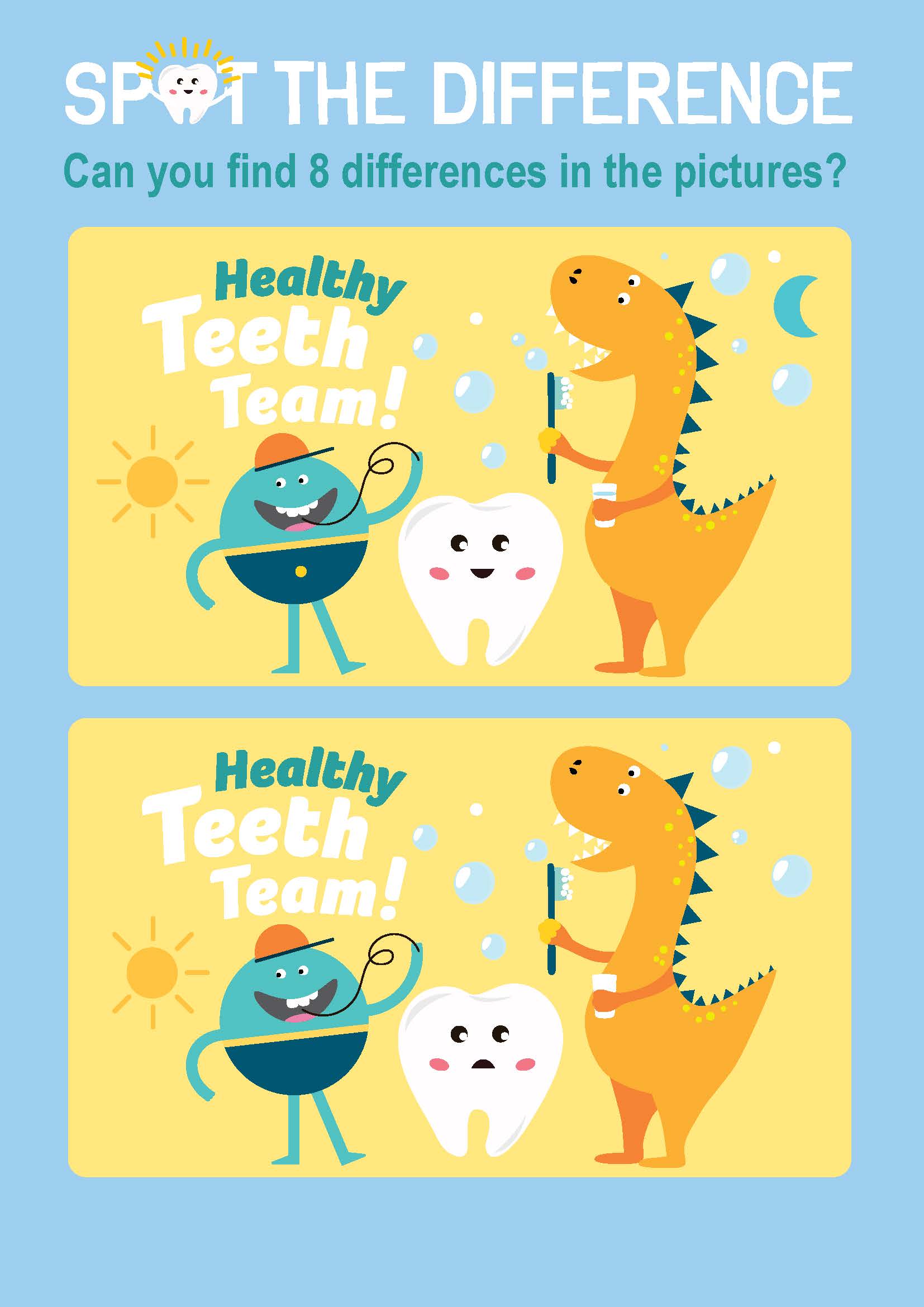
There’s a Teeth Brushing Chart, a Spot the Difference activity and a Colour-in Brushing Guide for your child to follow — all ready to download below.
Tooth decay in infants and toddlers is sometimes referred to as “baby bottle tooth decay”, as it can occur if a baby is put to bed with a bottle, or if a bottle is used as a pacifier for a fussy baby.
Baby bottle tooth decay most often occurs in the upper front teeth, but other teeth can also be affected.
Even though they are temporary, your child’s baby teeth are important, and they are still susceptible to cavities. Children need strong, healthy teeth to chew their food, speak and have a good-looking smile. Their first teeth also help make sure their adult teeth come in correctly. It’s important to start infants off with good oral care to help protect their teeth for decades to come.
What causes baby bottle tooth decay?
Many factors can cause tooth decay. One common cause is the frequent, prolonged exposure of the baby’s teeth to drinks that contain sugar – such as when the baby is put to bed with a bottle, or when a bottle is used as a pacifier for a fussy baby.
Tooth decay can also begin with cavity-causing bacteria being passed from the mother (or primary caregiver) to the infant in the saliva. When the mother puts the baby’s feeding spoon in her mouth, or cleans a pacifier in her mouth, the bacteria can be passed to her baby.
If your infant or toddler does not receive an adequate amount of fluoride, they can also have an increased risk of tooth decay.
The good news is that decay is preventable!
Preventing baby bottle tooth decay
Try not to share saliva with your baby with the common use of feeding spoons or licking pacifiers. After each feeding, wipe your child’s gums with a clean, damp gauze pad or washcloth.
When your child’s teeth come in, brush them gently with a child-size toothbrush and a smear of fluoride toothpaste, the size of a grain, until your child is 3 years old.
Brush the teeth with a pea-sized amount of fluoride toothpaste from the ages of 3 to 6.
Supervise brushing until your child can be counted on to spit out (not swallow) toothpaste— which is usually not before he or she is 6 or 7.
Place only formula, milk or breastmilk in bottles. Avoid filling the bottle with liquids such as sugar water, juice or soft drinks.
Finish bedtime and naptime bottles before the baby goes to bed.
Provide a clean pacifier to your child, —don’t dip it in sugar or honey.
Encourage your child to drink from a cup by his or her first birthday.
Encourage healthy eating habits.
When your child’s first tooth appears, talk to our dentist about scheduling the first dental visit. Treat the first dental visit as you would a well-baby checkup with the child’s doctor.
Remember: starting early is the key to a lifetime of good dental health. For more information about nutrition and your baby, visit the Academy of Nutrition and Dietetics.





 Book Now
 9868 3037
 9868 3037